


Elgol pier, at the end of the road on the south-west of Skye, is the best spring-board into the south-west Hebrides for wildlife. Three boat operators work from the pier. The sea around here is productive. Grey seals haul out on skerries at the mouth of Loch Scavaig. Puffins breed on the cliffs of Canna, twenty minutes offshore. Minke whales, common dolphins and basking sharks pass through in season. White-tailed eagles have returned to nest in the cliffs above the Small Isles. Otters work the coast first thing and last thing, every day.
That is the spread. What follows is a species-by-species read on what you are actually likely to see on a wildlife trip from Elgol, in which month, and with which operator.
Puffins
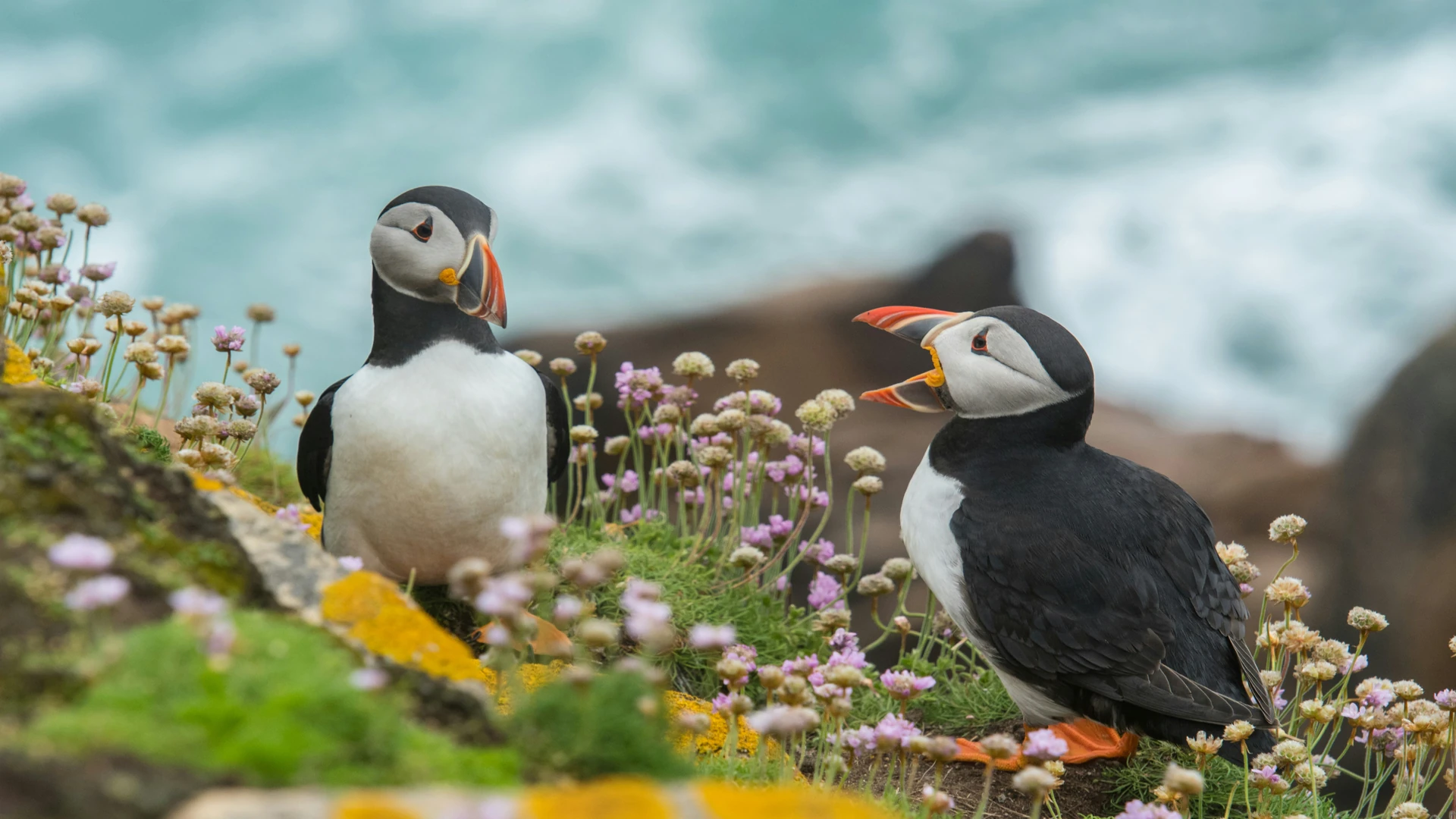
Puffins are the flagship species. AquaXplore states they are guaranteed May to July on the Canna run, with arrivals from early April and departures usually by the first week of August. The colony breeds on Canna’s sea cliffs on the north-west side of the island.
On the Puffin Run, the RIB comes up close under the cliffs. Puffins are on ledges, rafting on the water, returning to burrows with sand eels in their beaks. Razorbills and guillemots share the same stretch, with kittiwakes and fulmars above them, and occasionally a great skua hassling a gull.
The best month is June, when the chicks are still being fed and the adults are coming back to the colony every hour or two. By mid-July the birds start dispersing, and by the first week of August most are gone.
You will be within fifteen metres of the cliff at points. With a 200mm lens you get the classic beak-of-sand-eels photograph; without one, the eye sees the birds clearly.

Seals
Grey seals are resident year-round and haul out on skerries around the mouth of Loch Scavaig. Any boat trip out of Elgol that heads south-west passes seal ground. On a typical sailing you see ten to forty animals.
Pupping season is September into November, which is also when the big bulls come ashore to fight. A September trip will sometimes pass big adult males lying on the rocks in full sun, and pups nearby. The seals tolerate the boats at a distance. They have grown up with them.
Common seals (harbour seals) are also present but fewer. The small-headed, spotted ones closer in-shore are harbour seals. The bigger, Roman-nosed animals on the outer skerries are grey seals.
White-tailed eagles
The re-introduction programme in the 1970s (Rum) and 1980s (Mull) has put sea eagles back into the south-west Hebrides in good numbers. Elgol is within the hunting range of multiple pairs.
Reality of seeing one on a boat trip: sightings are common but not guaranteed. Maybe one trip in three will get a definite eye-on bird, either perched or cruising the cliffs. The best chance is around the cliffs of Rum and Canna. You are looking for something the size of a barn door with a white tail. Once you see one you do not mistake it for a buzzard.
Minke whales and common dolphins
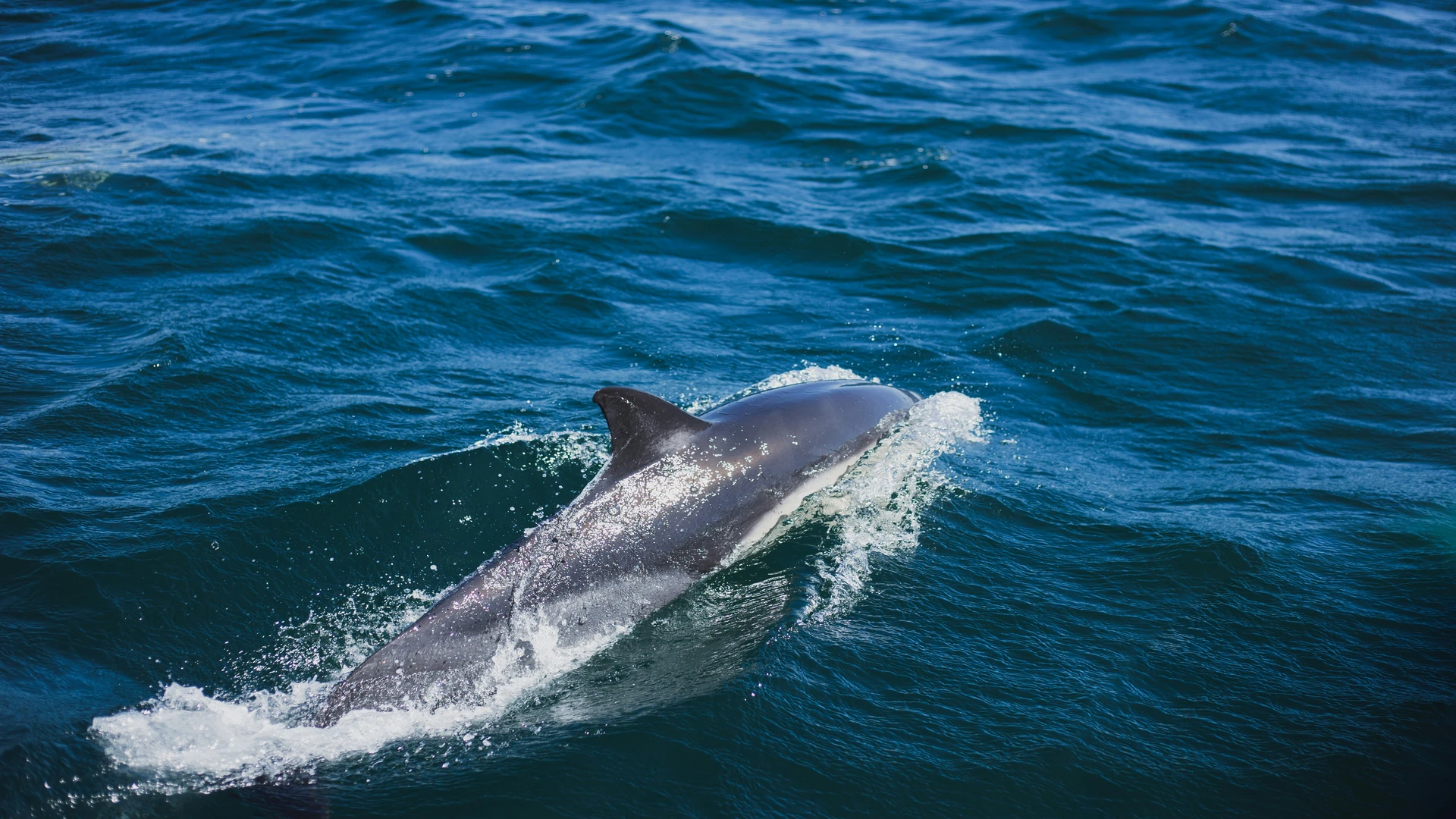
Minke whales come up the west coast each summer, following the mackerel and herring. Peak sightings off Skye are usually July to early September. They are not guaranteed. A sighting on a four-hour RIB run to Canna in good weather in August is a decent chance, perhaps one trip in four or five. Minkes are the size of a large bus, predominantly dark with a small fin, often just a glimpse of the back as they breathe.
Common dolphins arrive in smaller groups and move fast. They are more likely to bow-ride a RIB than to hang around. A pod of ten to fifty animals is a typical size. Sightings are seasonal, mostly June to September.
Orcas (killer whales) are occasionally seen in the Inner Sound between Skye and the mainland, most famously the so-called West Coast Community pod. Sightings are rare enough that any boat skipper who tells you orcas are likely on any given trip is overselling.
Basking sharks
Second-largest fish in the world, up to ten metres, filter feeders, harmless. They come to the Hebrides to feed on plankton concentrations in summer. Peak sightings July to early September in warm, settled weather. They are usually seen at the surface, dorsal fin up, mouth open, slow-moving.
Realistic odds on any given trip from Elgol: not guaranteed. You are more likely to see them on a trip out past Soay and Rum than on a short Loch Coruisk run. If the sea is glassy and the sun is out and July or August, the odds improve significantly. Most summers, some people see them; some do not.

Otters
Not a boat trip species, but worth mentioning. Otters live along every mile of the Elgol shoreline. Your best chance of seeing one is not on a boat but on foot, at the harbour or on the road to Glasnakille in the first hour of daylight or the last hour of light, at a low tide. They are fast. Look low at the water line. If you see what looks like a seal but smaller and more hunched, it is probably an otter.
Seasonal snapshot
April: first puffins returning to Canna, increasing by the week. Seals always. Quiet on the trails. May to July: puffins guaranteed, seals always, eagles sometimes, dolphins increasing towards July. August: puffins leaving, but basking sharks and minke whales at their peak. September: pupping seals starting, autumn passage migrants, fewer other tourists. October: wildlife settling down for winter, but red deer rut on shore, and the last of the sea eagle fledglings.
What to pack for a wildlife trip
Waterproof jacket, always. A layer more than you would wear on land. A hat. Sunglasses (reflected sea light is hard on the eyes). A dry bag for any camera or phone you don’t want to soak. Binoculars, 8×42 or 10×42 are the general-purpose size.
Sea-sickness tablets if you are prone to it. Even a glassy Loch Scavaig has a swell at the mouth. A RIB in open water past Soay will move. Take the tablet an hour before the sailing.
A wildlife trip is the one where a serious camera earns its keep. If you are taking a phone, the zoom on modern phones is better than it used to be but still short of what a 300mm lens gives you.

After the day on the water
Back at the pier by mid-afternoon, Coruisk House is a two-minute walk up the road. Four rooms in the main house, two thatched cottages next door, and a four-course dinner at seven, with fires lit in the dining room by four in autumn. The langoustines on the plate were probably lifted from a creel in the same water you were over that morning.
Book rooms, read about An Nead (dog-friendly cottage). Phone +44 (0)1471 866 330. Email info@coruiskhouse.com.


